The Short Answer
Primal play is a style of kink built on raw instinct rather than rules: consenting partners chase, wrestle, pin, growl, scratch or bite, often in predator and prey roles. It swaps the protocol of traditional dominance and submission for physical, gut-level energy, and stays safe through careful negotiation, a stop signal that works mid-scramble, and aftercare.
Where classic BDSM can feel ceremonial and rule-bound, primal play is messy, physical and intuitive.
It taps the same predator-and-prey wiring that makes a play-fight or a chase thrilling, and people are drawn to it because it strips away politeness and lets them be loud, rough and unfiltered with someone they trust.
This guide is for consenting adults who are curious about that energy. It explains what primal play is, the predator, prey and switch roles, how it compares with structured BDSM, how a typical scene unfolds, and how to negotiate limits and stay physically safe.
It also covers how some people explore the chase in adult AI roleplay before trying it in person. The instinct may feel wild, but responsible primal play is carefully planned underneath.
What Is Primal Play?
Primal play is a form of kink in which partners lean into raw, animalistic instinct, such as growling, chasing, wrestling, pinning, scratching and biting, instead of the structured commands and rituals of conventional dominance and submission.
A primal scene runs on body language, energy and gut reaction rather than instructions like kneel or address me as Sir.
Primal play sits within the wider world of BDSM and kink, but it is often described as its own flavour because of how it feels.
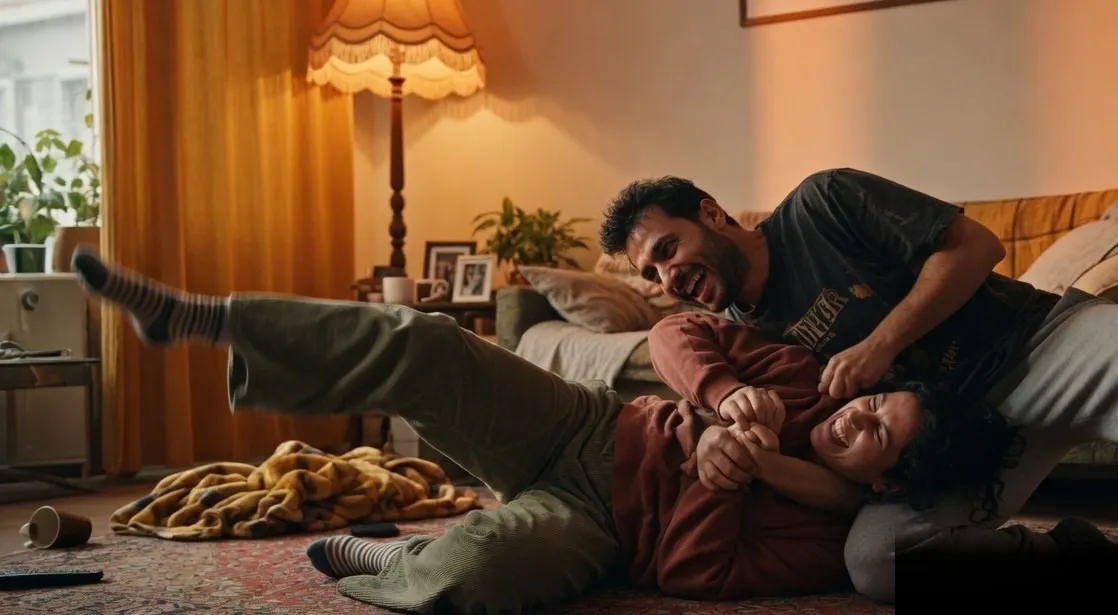
Traditional power exchange can be ceremonial and slow; primal play tends to be fast, loud and physical, whether that means a chase across a room, a play-fight on the bed or a low growl that signals the hunt has started.
Many practitioners say it gives them access to a side of themselves that everyday life keeps locked away.
Primal play is also a spectrum, not a single act. For some people it is mostly psychological: a predatory stare, a possessive grip, a growl in the ear.
For others it is intensely physical, with real wrestling and roughhousing. The intensity can go up or down, and there is no checklist you must complete to be doing it right.
Primal play is a style and a mindset more than a set of activities.
What Are Predator and Prey Roles in Primal Play?
Primal play usually uses two complementary roles modelled loosely on a hunt: the predator, who chases and captures, and the prey, who runs, resists and is caught.
Neither role is in charge the way a traditional Dominant is; both are active participants who shape the scene.
- Predator (or hunter): chases, pins, grabs, growls or bites, and drives the pursuit. A good predator stays closely attuned to the prey's reactions and limits at every moment.
- Prey: is chased, caught or overpowered, but is far from passive. Prey often runs, squirms, struggles and resists as part of the play, and like any bottom sets the limits and can stop the scene at any time.
- Primal switch: enjoys flipping between the two, sometimes within a single scene, such as a chase that reverses or prey who fights back hard enough to turn the tables.
A common misconception is that the predator holds all the control. In reality, the prey consents to being hunted and can withdraw that consent instantly.
Some people skip fixed roles altogether and simply meet each other with matched, instinctive intensity. As elsewhere in kink, these are labels to help you communicate, not boxes you must fit into.
How Is Primal Play Different From Traditional BDSM?
Primal play leans on instinct, body language and physicality, while traditional BDSM often leans on rules, protocol and verbal commands. The two are not opposites.
Many people enjoy both and they overlap freely, but naming the contrast helps you work out what you are actually craving.
| Aspect | Traditional D/s | Primal play |
|---|---|---|
| Driver | Rules, protocol and verbal commands | Instinct, body language and raw energy |
| Pace and feel | Often deliberate and ceremonial | Often fast, messy and physical |
| Typical activities | Restraint, service, obedience, sensation | Chasing, wrestling, pinning, growling, biting |
| Roles | Dominant and submissive | Predator and prey, or primal switch |
| Headspace | Focused control or submission | Animalistic, gut-level primal space |
Plenty of scenes blend the two: a predator may use a safeword system borrowed straight from structured kink, or a chase may end in rope bondage.
Primal play is also distinct from pet play, in which someone takes on a specific animal persona, such as a puppy or kitten, with its own behaviours and gear.
If formal commands leave you cold but a play-fight lights you up, primal energy may be what you are looking for.
What Happens in a Primal Play Scene?
A primal scene typically moves through a trigger that switches on the headspace, a chase, a capture and wrestle, and marking behaviours such as biting or scratching, all within limits agreed in advance.
There is no single script, but knowing the usual building blocks helps newcomers picture what they are getting into and choose which parts appeal.
- The trigger. Many couples use a cue to switch on the primal headspace: a growl, a particular look, a phrase, or simply starting to circle each other.
- The chase. Prey runs, dodges or hides while the predator pursues. Even a small space works, because the thrill is in the pursuit and the moment of being caught, not the distance covered.
- The capture and wrestle. Once caught, play often turns physical, with pinning, holding down, rolling around and resisting. Consent and limits matter most here, because real bodies and real force are involved.
- Marking. Biting, scratching and gripping are hallmark primal acts. They can leave marks, so partners agree in advance where marks are okay and how intense they can be.
Throughout, the predator stays responsible for reading their partner. Roughhousing can escalate quickly, and the line between thrilling and too much can move fast in the heat of a scene, so build intensity in stages, starting with light grappling.
Growling and snarling can deepen the headspace, but they should never drown out a safeword or a clear signal to stop.
How Do You Negotiate Consent in Primal Play?
Primal play needs careful negotiation before the scene, because it combines real physical force with an instinct-led headspace in which clear thinking is harder.
The paradox of good primal play is that the more thoroughly you plan the boundaries, the more freely you can let go inside them. Negotiate while both partners are calm and clear-headed, never mid-scene.
- Activities and intensity: is biting on the table, or scratching, or hair-pulling? How hard can wrestling get, and is anyone trying to win?
- Hard and soft limits: hard limits are absolute no-gos and soft limits are maybes. Be specific, for example biting yes, but not on the face or neck.
- Marks: bites and scratches can stay visible for days, so agree where marks are acceptable, especially if either of you has work, family or other reasons to stay unmarked.
- Health factors: old injuries, joints that dislocate, asthma, or anything else affected by rough contact. Biting carries a real risk of breaking skin, so discuss it honestly.
- Safeword: because no or stop may be part of the play, use a neutral safeword or the traffic-light system (green, yellow, red) so a real stop is unmistakable.
Chasing and wrestling can make speech difficult, so many primal players also agree on a non-verbal safe-signal, such as a tap-out like the one used in grappling or dropping a held object, which the prey can use even when pinned or breathless.
Choose signals that work for the scene you are actually planning. A safeword that can't be used in the moment isn't really a safeword.
How Do You Stay Safe During Primal Play?
Most primal play risks come from three sources: the environment, rough contact with vulnerable parts of the body, and biting or scratching that breaks the skin. A little practical preparation covers all three.
| Risk | How to reduce it |
|---|---|
| Falls and collisions | Move sharp furniture corners, glassware and trip hazards before a chase or wrestle. Soft surfaces like a bed or a padded floor reduce knocks. |
| Injury to fragile zones | Avoid striking, pinning or putting weight on the head, neck, spine and joints. Control your force, and never twist a joint against its range. |
| Infected bites | The mouth carries bacteria, and human bites that break skin can become infected. Keep bites to fleshy, padded areas and avoid breaking skin; if it happens, clean the wound promptly and watch for signs of infection. |
| Accidental cuts | Trim nails before scratching and gripping, and stay aware of where your teeth land in the heat of the moment. |
It also helps to know about primal drop, the emotional or physical comedown that can follow an intense, adrenaline-fuelled scene, similar to sub drop in other kinks. The crash after a chase can leave either partner shaky, tearful or low.
The feeling is normal and temporary, and it is exactly what aftercare is for: water, warmth, gentle contact and a calm check-in once the energy settles. Agree on aftercare during negotiation so neither partner is left to come down alone.
How Can Beginners Try Primal Play?
Beginners can try primal play by talking first, starting with low-stakes versions such as a gentle play-wrestle or a slow chase, and using a safeword and tap-out from the very first scene.
No gear, training or seasoned partner is required, only communication and a willingness to start small.
- Talk before you pounce. Share what draws you, whether that's the chase, the wrestling, the biting or the headspace, and ask your partner the same. Agree on limits and a safeword before anything physical starts.
- Start low-stakes. A gentle play-wrestle, a slow chase around the bed, a growl in the ear or light hair-pulling are all easy first steps. You can always escalate later, but you can't un-ring a bell mid-scene.
- Build the stop habit early. Even mild primal play benefits from green, yellow and red plus a non-verbal tap-out, so the habit is in place before things get intense.
- Plan the comedown. Decide in advance how you will wind down together, and treat aftercare as part of the experience rather than an optional extra.
To learn from other practitioners, community platforms such as FetLife host discussion groups and educational events where primal play is a popular topic, and in-person munches, which are casual, clothes-on social meetups, are a low-pressure way to ask experienced people questions.
There is no quota and no rush, so explore at a pace that feels right for both of you.
Can You Explore Primal Play Through AI Roleplay?
AI roleplay can help you explore the energy of primal play, meaning the hunt, the headspace and whichever role appeals to you, but it can't prepare your body for the physical side.
Wrestling force, bites, a cleared space and a working tap-out all need a real, consenting partner.
A primal character works best when its description does the negotiating up front. A useful checklist:
- Role and energy: predator, prey or switch, and whether the mood is playful, intense or possessive.
- The trigger: the cue that starts the hunt in the story, such as a look or a growl.
- Limits: what the character never does, written into the description itself.
- A stop convention: many roleplayers use an out-of-character note, often in brackets, to pause or redirect a scene instantly, which is the text equivalent of a tap-out.
Platform rules matter for this kink in particular, because prey resistance sits close to consent themes. SpicyChat AI allows adult roleplay but prohibits non-consent framed as endorsement, and CrushOn AI lists non-consent among its hard limits.
Writing the chase as a clearly agreed game between adult characters keeps it within those rules, and it is also closer to how real primal play works. Never base a character on a real person.
Frequently Asked Questions
No. Primal play channels raw predator or prey instinct without a fixed animal identity, while pet play involves adopting a specific animal persona, such as a puppy or kitten, with its own behaviours and often its own gear.
The two can overlap in one scene, but their focus is different.
No. Primal play uses predator and prey roles rather than formal Dominant and submissive ones, and many people who don't connect with structured power exchange find that primal energy clicks for them. You can also be a primal switch who moves between the roles.
Biting can be done safely with care. Keep bites to fleshy, well-padded areas, agree beforehand on where and how hard, and avoid breaking the skin, because human bites that draw blood can become infected.
If skin does break, clean it straight away and keep an eye on it.
Primal drop is the low mood or physical crash that can follow an intense, adrenaline-heavy primal scene, much like sub drop. Someone in drop may feel shaky, tearful or drained.
The feeling passes, and rest, water, warmth and reassurance from a partner help both people recover.
Partners agree beforehand on a neutral safeword, or the green, yellow and red system, plus a non-verbal tap-out.
Because prey may shout no or stop as part of the game, those agreed signals are the unmistakable stop, and any sign of real distress should end the scene too.
Wrapping Up
Primal play is consensual permission to be a little wild: to growl, chase, wrestle and bite with someone who has agreed to meet that energy. Instinct-led is not the same as planning-free, though.
The best primal scenes have the clearest negotiation underneath them, with agreed limits, a safeword or tap-out that works mid-scramble, and partners who trust each other to stop on a dime.
Start gently, learn where it is safe to grab and bite, keep your nails and teeth in mind, and treat aftercare as part of the scene rather than an afterthought.
If rougher sensation interests you too, our guide to impact play covers warm-ups and safe body zones.