The Short Answer
Pet play is consensual roleplay between adults in which one person takes on the persona and headspace of an animal, most often a puppy, kitten, or pony, while a partner usually plays a handler or owner. It is entirely human roleplay with no connection to real animals, and it can be playful, affectionate, or part of a power exchange.
This guide is for adults who are curious about pet play, want to explain it to a partner, or are looking for a safer way to begin.
It covers the main styles, what 'pet headspace' feels like, the gear people use, why the dynamic appeals, how consent and aftercare work when a pet may be non-verbal, and how to get started, including how some people try out a pet persona in AI roleplay first.
One point deserves to be made plainly at the outset: pet play involves consenting adults only, and it has nothing whatsoever to do with real animals or bestiality. Conflating the two is both inaccurate and harmful.
What Is Pet Play?
Pet play is a consensual roleplay in which an adult adopts the persona and behaviours of an animal while their partner often plays a handler, owner, or caretaker.
The animal is almost always a species people feel affection for: a puppy, a kitten, or a pony are the most common.
The person in the pet role might communicate through gestures or simple sounds instead of full speech, respond to a name or commands, and set aside adult responsibilities to inhabit a simpler frame of mind.
Pet play is entirely human roleplay between consenting adults and has no connection to real animals or bestiality. No animals are involved at any point.
The appeal is psychological and relational: the pet enjoys a sense of release, affection, or playful submission, while the handler enjoys nurturing, guiding, or directing.
Some people experience it as sexual, others as purely affectionate and non-sexual, and many move between the two depending on the moment.
Pet play overlaps with BDSM and power exchange but isn't limited to them. You can practise it as a light, giggly bit of fun, as a deep ongoing dynamic, or anywhere in between.
For the consent and power-exchange concepts it often draws on, our guide to BDSM basics is a useful companion read.
What Are the Main Types of Pet Play?
The three most established types of pet play are pup play, kitten play, and pony play, each with its own culture and feel. None is more 'correct' than another; they simply suit different personalities.
| Type | Typical persona | Common traits |
|---|---|---|
| Pup play | Puppy or dog | Energetic, loyal, eager to please; often playful and social, sometimes practised in groups or 'pup packs'. Frequently involves toys, fetch, and bouncy enthusiasm. |
| Kitten play | Cat or kitten | Independent, curious, affectionate on their own terms; can be more aloof or coy than pups. Often gentler in tone. |
| Pony play | Horse or pony | Focused on grace, posture, training, and discipline; can involve harnesses, carts, or dressage-style movement. Tends to be the most equipment-heavy style. |
There is plenty of variety within each style. A pup might be a confident 'alpha' or a shy, cuddly companion; a kitten might be a lap cat or a mischievous troublemaker.
People blend elements freely, and some prefer fantasy creatures or a generic 'pet' with no fixed species. The personas are a starting point for self-expression, not a rulebook you have to follow.
What Is Pet Headspace?
Pet headspace is the shift in mindset people feel when they drop into their pet persona, usually described as more instinctive, present, and free of adult worries. For many, it is the central appeal.
The usual mental chatter quietens, and the person responds more simply to affection, play, and direction. Pups often describe a wave of carefree, bouncy energy; kittens a soft, contented calm.
The state has parallels with 'subspace', the floaty, euphoric feeling some people reach during intense BDSM scenes. Like subspace, pet headspace can make complex decisions or speech harder in the moment, which is exactly why pre-agreed signals and an attentive handler matter so much.
The handler's job includes watching for cues, keeping the pet safe, and gently guiding the experience.
Coming out of headspace can bring an emotional dip, similar to the 'drop' people feel after other intense scenes, and that is where aftercare comes in. Not everyone reaches a deep headspace, and that is completely fine.
Pet play is enjoyable whether you fully transform or just lean into a playful role for a while.
What Gear Do You Need for Pet Play?
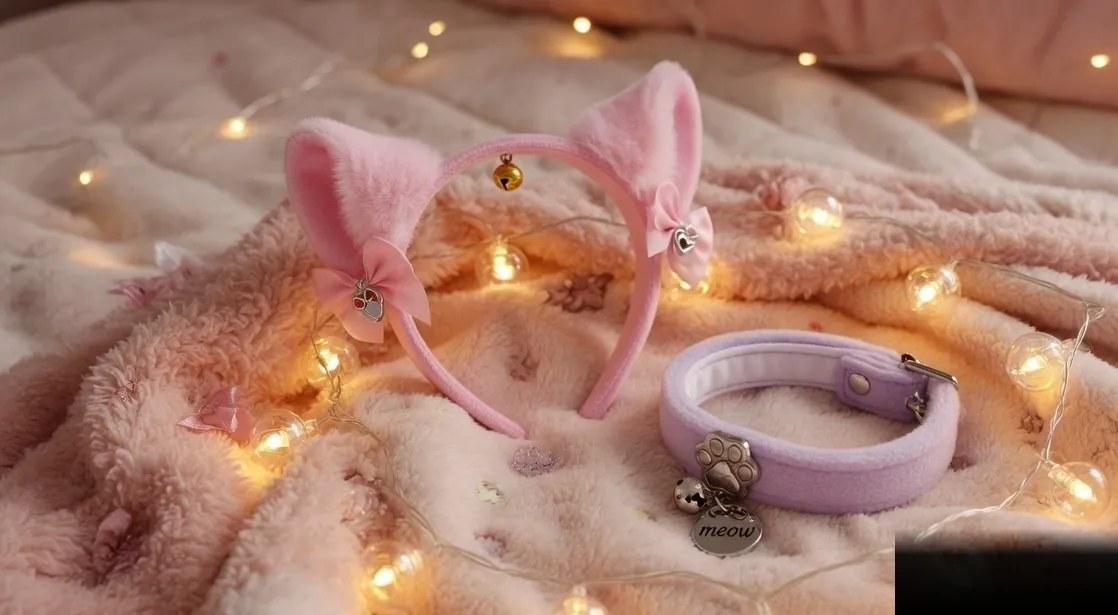
You don't need any gear for pet play, and plenty of people start with nothing but imagination and a willing partner, but collars, ears, tails, hoods, and padding can deepen immersion.
When people do use equipment, it tends to be chosen to evoke the animal and support the headspace:
- Collars. Often the most meaningful item, a collar can symbolise belonging, a bond, or simply the pet role.
- Ears and tails. Headband or clip-on ears, and tails attached to clothing, are popular for both pups and kittens.
- Hoods and masks. Pup hoods, often made of neoprene or leather, are a signature of pup play and help wearers feel fully in character.
- Mitts, knee pads, and harnesses. Padded mitts discourage using hands, knee pads protect joints, and harnesses feature heavily in pony play.
- Toys and accessories. Chew toys, bowls, leashes, blankets, and beds reinforce the fantasy and give the pet things to interact with.
If you buy gear, prioritise body-safe materials, a comfortable fit, and anything worn around the neck being quick to remove.
Treat prices as approximate: a simple collar and clip-on ears can cost only a few dollars, while elaborate leather hoods and custom pony tack can run into the hundreds. Start cheap, learn what you actually enjoy, and invest later if you want to.
Why Do People Enjoy Pet Play?
People enjoy pet play for escape, affection, playfulness, power exchange, and community, and most are drawn by a mix of these rather than a single reason. The motivations are varied, valid, and very human:
- Escape and release. Dropping into a pet persona lets people set down adult stress and responsibility for a while, which many find genuinely restorative.
- Affection and care. The pet-handler bond can be deeply nurturing: pets feel cherished and looked after, and handlers enjoy providing comfort and structure.
- Play and freedom. Being a pup or kitten gives permission to be silly, impulsive, and uninhibited in a way everyday life rarely allows.
- Power exchange. For some, the appeal sits within dominance and submission: following commands, training, or yielding control to a trusted handler.
- Community and identity. Especially in pup play, the social side matters, and many people value the friendships, events, and shared identity.
Interest in pet play is a normal variation of human sexuality and self-expression, much like interest in other forms of kink. It sits comfortably alongside related instinctive dynamics such as primal play, and being curious about any of it says nothing negative about you.
How Do Consent and Aftercare Work in Pet Play?
Consent in pet play works as it does in any kink, negotiated in advance and revocable at any time, but because a pet may be partly or fully non-verbal in character, signals need extra attention. Sort the following out before you play:
- Negotiate the scene. Agree what the pet and handler each want, what is off-limits, how long you will play, and whether the dynamic is sexual, non-sexual, or flexible.
- Set non-verbal safe signals. A spoken safeword is little use to a pet who is barking or staying in character. Agree on a clear gesture, a specific sound, or an object to drop that means 'slow down' or 'stop' instantly.
- Mind the body. Crawling and kneeling are hard on wrists, knees, and the neck. Use padding, take breaks, stay hydrated, and never restrict breathing with collars, hoods, or leashes.
Aftercare, the gentle attention partners give each other once a scene ends, is just as important here as in any other kink.
Coming out of pet headspace can leave someone feeling vulnerable, tired, or emotionally raw, so plan a calm wind-down: water, a snack, a blanket, reassuring words, and a quiet chat about what worked. Our guide to aftercare applies directly to pet play.
Handlers can experience a drop too, so check in with each other rather than focusing on the pet alone.
How Do You Get Started With Pet Play?
The simplest way to start pet play is small and slow: explore the persona on your own, talk to a partner, and try a short, light session with signals agreed in advance. You don't need a partner, a budget, or any equipment to begin. A gentle path looks like this:
- Explore solo first. Notice what appeals to you. Do you feel more like a bouncy pup or a calm kitten? You can practise headspace or persona ideas entirely on your own.
- Talk to your partner. Explain what pet play is (and isn't), what you hope to try, and which role might appeal to them.
- Start small. Wearing a collar, taking on simple pet behaviours, and being petted or given easy commands makes a perfect first session.
- Agree signals and aftercare in advance. Even for gentle play, set your stop signal and plan how you will wind down together.
- Add gear and depth gradually. If you enjoy it, layer in ears, a tail, or a deeper dynamic at whatever pace suits you.
Many people also value connecting with others who share the interest. Kink community platforms host pet-play groups, advice threads, and real-world meetups where newcomers are welcome, and reputable kink educators are good places to learn.
There is no quota to hit and no 'right' way to be a pet, only the version that feels good and stays consensual.
Exploring Pet Play in AI Roleplay
Pet play translates well to AI roleplay because much of it is about persona, headspace, and the pet-handler relationship, all things a character chat can hold, while the physical side stays offline.
Some adults use AI roleplay to try on a persona before sharing the interest with a partner; others enjoy it as a light, affectionate fantasy on its own.
There are two common setups:
- You play the pet. Create a persona for yourself, such as a bouncy pup or an aloof kitten, and write the AI character as a patient handler. Actions written between asterisks or in brackets stand in for the nudges, sounds, and gestures a pet uses instead of full speech.
- You play the handler. Write the AI character as the pet, with a clear personality: loyal and eager, or curious and coy. This suits people who enjoy the caretaking side.
Community character-chat apps suit this kind of scenario roleplay. Janitor AI has a persona system for creating multiple personas for yourself, plus lorebooks for facts the AI should always know, and SpicyChat has a character creator with fields for personality, scenario, greeting, and example dialogue.
Use the scenario field to state that both characters are adults, that this is human roleplay, and anything that is off-limits.
What doesn't translate is the body. Crawling, kneeling, collars, and hoods carry real physical risks, and an AI can't watch your breathing, notice sore knees, or bring you a blanket afterwards.
Treat AI roleplay as a way to explore the persona, and keep physical practice for a trusted, consenting partner and the safety steps above.
Frequently Asked Questions
No, and the distinction matters. Pet play is human roleplay between consenting adults in which someone takes on an animal persona, and no real animals are involved at any stage. Bestiality involves actual animals and is something entirely different and unrelated to pet play.
No. For some people pet play is erotic, while for others it is purely affectionate, playful, or a way to relax inside a caring dynamic.
Many move between sexual and non-sexual pet play depending on the day and the partner, and both approaches are equally valid.
Not at all. Pet play starts in the imagination and needs no equipment.
If you want props, a basic collar and clip-on ears are inexpensive; pricier items such as leather hoods and pony tack are optional extras, not requirements, so it makes sense to wait until you know what you enjoy.
Yes. Plenty of people explore their pet persona, headspace, and gear solo before involving anyone else. It is a low-pressure way to discover which style suits you and what you would want to ask a partner for later.
A handler, sometimes called an owner or caretaker, is the partner in the human role who looks after, guides, plays with, or trains the pet. A good handler watches out for the pet's safety, respects agreed limits, and provides aftercare when the scene ends.
Adults can explore a pet persona in AI roleplay by writing a handler or pet character in a character-chat app. It is a low-pressure way to try the headspace and dynamic, but it can't replace a real partner for physical play, safe signals, or aftercare.
Wrapping Up
Pet play is a creative, intimate form of human roleplay built on trust, imagination, and consent, and never anything involving real animals.
People come to it for the quiet of an instinctive headspace, the warmth of being cared for, the release of play, or the structure of a handler dynamic, and none of those motivations is strange.
You don't need expensive gear, or even a partner, to start exploring what appeals. What you do need is communication: negotiate clearly, agree signals that work when you are non-verbal, and plan aftercare.
If the instinctive side appeals most, our guide to primal play is a natural next step.